Your Pet's Itching, Hair Loss, and Lesions Have a $100 Fix Your Vet Doesn't Know About
- To: Emily June

- Mar 30
- 19 min read
Updated: Apr 9
What you'll learn
Why repeating the same food can create inflammation over time
The underbelly of the pet food industry (and why it changed how I read labels)
How to think about food + treats + water as hidden sources of symptoms
How to successfully treat the source of the problem and end the repeated vet visits
Table of contents
Why I’m Writing This
A Happy Ending Up Front
The Mistakes A Majority of Pet Parents Make
Peak At The Dark Side Of The Pet Food Industry
Food Choices to Consider
Hidden Sources of Inflammation
Here’s The Solution
I Want To Save You From This Time Consuming Expensive Rabbit Hole
I'm Writing This to Save Your Pet Time Suffering & You Money
A while back, I started having symptoms that led me from one doctor to another until I realized the medical system was for profit, and I had to diagnose, treat, and resolve my symptoms myself.
Having recovered enough to be employable, I started working for 5Strands, an intolerance-testing company, and what I learned about food and veterinary care mirrored my own experience reading labels and making repeated visits to practitioners in search of relief.
The expensive, prolonged suffering pets endure despite our dedicated attempts to solve the issue still ticks me off long after leaving this company. It's not you. It's the system.
I still talk about this testing because it actually gets to the root of the problem, rather than stringing you along with hundreds to thousands of dollars in recurring costs that still leave your pet inflamed and suffering.
Like you, I can not stand to see an animal suffer. After you digest the concepts in this article, rest assured that your pet will have a voice, and you'll (not a medical claim) very likely be able to resolve their discomfort for the cost of an intolerance test and a bag of new food.
What I share with you comes from passion and lived experience, and reads more like a chat with a friend (which contains no AI) than a scientifically written paper.
I hope you find it valuable and that it saves you an immense amount of money while your fur family enjoys longevity and an excellent quality of life.
A Happy Ending Up Front - Major Pet Food Intolerance Symptoms Resolved
One of my first tasks at 5Strands was to optimize the CEO’s Google Drive.
In the process, I saw many before-and-after photos of cats, dogs, and people who transformed their skin, weight, and bowels through a dietary shift based on their intolerance test results.
I’m talking, nasty lesions, missing hair on skinny cats, and dogs with raw paws from obsessive paw licking, all resolved.
One of the most impactful testimonials was of a Frenchie, who had repeatedly undergone surgery to remove tumors.
A single hair sample sent to Georgia through the mail had resulted in a diet change that turned into one year tumor-free, then two.
One of her big wins was that her love for her dog no longer had to be matched by her investment in her vet.
Paisley’s mother had spent thousands on vet care, including antibiotics, steroid allergy meds, consistent food changes, and surgeries.
The problems just kept persisting despite her efforts.
Little did I know at the time that her experience would be parroted by hundreds of pet parents over my two years with 5Strands.
Naturally, these photos and heartfelt emails strengthened my conviction in the company right off the bat, especially after adding my pre-employment testing experience of increased energy while dealing with chronic fatigue symptoms.


The Mistakes A Majority of Pet Parents Make
One of the first paradigm shifts I had while working in the marketing department, speaking to so many influencers and pet parents, was in realizing many of us feed our pets the same food day in and day out, indefinitely.
Personally, I cannot imagine eating the same food every day for the rest of my life, and that being my only choice, but that’s what I was offering my cat, and it brings me to my first point.
Whether your pet is eating a healthy food of higher quality or something more equivalent to our breakfast cereals (with fortified vitamins, preservatives, and flavor enhancers), when the same diet is repeated every single day, that nutrition builds up in the body.
You get an abundance of one thing and a deficiency of another. That nutritional imbalance alone can cause inflammation regardless of quality.
After some time, you may notice symptoms of imbalance, such as loose or infrequent bowel movements, itching and skin lesions, or a change in temperament. There is a slew of additional symptoms that may or may not be present.
By this time, your cat or dog’s gut is lit up like lights on a Christmas tree with inflammation that reacts to nearly every new thing you put in front of them.
Rather than removing one ingredient at a time, this is when intolerance testing is handy. It’s going to highlight which irritating offenders are, whether they're a protein or a preservative, while also enlightening you on exactly what your pet can digest without symptoms.
That’s huge.

That means they can start showing signs of healing within days to a couple of weeks, which will later allow the scope of their diet to widen as healing continues.
Quick recap: Going forward, rotate their food every one to three months for optimal nutrition plus gut health, and for the love of variety.
Peak At The Dark Side Of The Pet Food Industry
Brace yourself because these next slightly gross and shocking thing needs to be said.
When I learned this, it was the equivalent of learning what’s in McDonald’s and choosing never to touch it again.
We are talking about meat meal and meat byproduct meal.
What’s the difference?
By-product meal consists of fat, cartilage, lung, liver, kidneys, and bone, excluding meat, while containing multiple types of animals.
Meat meal also consists of multiple animal types, but includes meat this time, along with bones, cartilage, and fat.
Whether meat or fish, it contains multiple species unless it is specifically named otherwise.
The mixture is chemically treated to kill bacteria, heated to remove fat and moisture, and then ground into a concentrated protein powder.
Aerial photographs of pet food factories show massive quantities of diseased animals unfit for human consumption sitting on the cement in the sun before being processed.

Anyways, my point is that this high-heat processing of unfit animals to kill bacteria also kills nutritional value, which is why you see a long list of synthetic vitamins towards the end of an ingredient list on a bag of pet food.
The grains and carbohydrate fillers also don’t have the nutrition, hence the added vitamins.
Interestingly enough, there is specialized science, just like a fast food chain employs scientists to create flavor enhancers; the same is done in pet food.
The trick is to make it palatable to the animal without smelling so rancid and disgusting that it detours the human, yet enticing for your pet.
It’s also designed to be addictive, and those colors are not to be pretty for them, but to signal to your brain that there is nutritional diversity in the food.
That is for you, just like the pictures of vegetables and large bright chunks of meat are for you when you make a purchase.
Do you know what else those lab-created flavor enhancers are doing besides enticing your pet to eat?
They are masking GMO grains, which are a major source of pesticides that decrease gut flora, leading to intolerance symptoms.
They wouldn’t be appealing to your cat, who is a carnivore, or your dog, who allows more liberty but is also evolved from an animal that digests and thrives on raw meat.
Rice, barely, wheat, corn, soy, or pea protein are not wild forage foods but are fillers to make your pet’s food less expensive to produce for a higher profit margin.
They’re relying on the recommendations of vets educated about them in school, savvy marketing, and their brand being recognized by your family for decades.
Like with Coca-Cola, popular doesn’t mean healthy.
Honesty in a 1960’s ad you’d never see today.

Food Choices to Consider: Ending Pet Itching, Hair Loss, and Lesions
Before I started working for 5Strands, I mentioned I was debilitated with chronic fatigue, and in trying to restore vitality, I was incorporating mineral and vitamin-rich foods in juiced and raw forms.
Let me tell you my bowels were impressively regular.
My skin looked radiant, and my weight was finally impeccable.
I was still struggling to live in a moldy environment, yet I looked amazing.
As I mentioned earlier, your dog, specifically your cat, is a raw meat eater.
I know that sounds like common sense, but it's also kind of shocking, as we’ve largely been removed from the primal side of supplying our pets’ food, yet enjoying the kindness of our fur family.

I’m not telling you to feed your pet raw.
As with humans, animals can thrive on cooked food.
It’s a personal choice, and honestly, it reflects a much different price tag than a bag of kibble.
However, switching to raw will negate grain carbohydrates, synthetics, and artificial flavoring and create the most nutritional bioavailability possible.
Lucky for us, many pet food companies supply raw food in the freezer section of your specialty pet supply store.
Some even deliver to your doorstep via email subscription.
Another option is cooking your pet’s food at home.
This is not to say that you can’t find quality minimally processed brands online or in your specialty food store.
Some people choose to utilize their crockpot to maximize nutrition by making cost-effective meals in bulk for their pet for a week or a month at a time and freezing them in designated portion sizes, say, a glass container or a ziplock bag, left to defrost on the counter before work.

This is especially useful if your pet is experiencing severe symptoms.
Their intolerance test is coming back red for nearly every protein, and this indicates a severely inflamed digestive system.
Rest assured, I’ll repeat, this can be resolved as the body heals.
If you’re considering making a dietary change, I implore you to do it gradually.
Mix the new food with the old while slowly decreasing the old.

It’s just like with people.
If you take an animal that is used to high carbohydrates and flavorings, aka MSG, then switch to a clean diet, it’s a possibility they are going to revolt simply because flavor enhancers stimulate the brain as something really tasty and take time to detox from allowing the enjoyment of whole foods.
My final note on food: Remember, the simpler, less processed, and more nutritionally available, the better.
Your time and money invested in optimal food may reduce the cost of illness and contribute to a longer, more vibrant life with less or no pain.
Hidden Sources of Inflammation Your Pet Is Ingesting
I’ve talked a lot about diet because it’s extremely important and the biggest cause of inflammation, leading to symptoms.
I will mention briefly how, before working for 5Strands, it had not occurred to me to scrutinize the quality of toys and treats we give to our pets.
For example, tennis balls contain a number of chemicals, including petroleum-based solvents, and are commonly positive for lead. They also wear down your dogs teeth.

Plastic chewy toys can fracture teeth while being a source of BPA contamination, which hopefully doesn’t cause intestinal blockage when parts are swallowed.
Rawhide bone-shaped chews can be chemically treated with bleach, and as we know, bleach kills bacteria, so what’s happening in your dog’s digestive system when it is consistently ingesting bleach?
Those Temptation cat treats are awful.
It’s easy to overlook the ingredients of the occasional treats for the main staple foods, yet treats cause intolerance symptoms, too.
Did you know tap water can contain residual pharmaceuticals from wastewater recycling, along with the chemicals used to treat bacteria?
There are even creatures living in your pipes and likely rust along with metals from your local area.
Eyeball whats in your local water source at EWG.org.
You and your pet want to drink filtered water.
Please don’t rely on endocrine-disrupting plastics that deliver stagnant water with synthetic minerals.
If you want to do a deep dive on water, email the word water in the subject line to hello@toemilyjune.com for more information.
For now, please know that poor water quality of all things can be a source of intolerances from bacteria, to plastics, to metals, blocking the absorption of nutrition.
Here’s The Solution To End The Symptoms
Think of it like this: if we eat fast food every meal, the same cereal every day, we will not get enough nutrition, experience weight changes, and develop arthritis.
Obviously, not everyone has the same digestive system, but statistically, this is probable.
Tack on stress, and then it increases.
So when it comes to your food, cleaner is better.
Rotation is key.
Treats can be enjoyable yet healthy.
An intolerance test can save you thousands of dollars at the vet, months or weeks of food changes, and guessing as to what the problem is all the while your pet is suffering through symptoms.
Use code RELIEF for the biggest savings, or TOEMILYJUNE if they figure out my employee discount code is still active.

If you feed your dog or cat cooked foods and kibbles, this test is for you. It also contains environmental items. I’ve heard stories of bedding bothering a pet. You never know.
If you want to know the whole situation up front, I highly recommend Comprehensive Testing. You will learn about diet, from foods to vitamins that are not absorbed, as well as environmental triggers, and metals commonly absorbed through toys or water.
If you plan on switching your dog or cat to raw food, this is your test. You’ll have to add on environmental intolerances and sensitivities to build a comprehensive test if that is your desire.
This will help you identify proteins and vegetables that your pet can actually digest, so you are not making an investment that your dog refuses to eat or poops all over the yard.
Sidenote: if you do switch your dog or cat to raw food, imagine yourself going from a diet of flavor enhancers you encounter while frequently eating out, to essentially switching to a juice cleanse.
It is very similar. There is a detox effect and an adjustment. So, I stress, please do this slowly.
I Want To Save You From This Time Consuming Expensive Rabbit Hole
Remember the frenchie, Paisley? Her story is so common that it’s an injustice that floors me.
We can solve pet itching, hair loss, and lesions with the most basic testing for less than $100, or with very comprehensive testing for just over $200.
I want to describe to you the breakdown of the experience I’ve heard numerous times from sympathetic pet parents trying to solve this problem at the vet.
Although this example is for a dog, the same applies to symptoms such as skin lesions and hair loss in cats.
Your dog is obsessively licking his paw to the point it’s raw and inflamed.

It’s keeping you up at night, and you both want relief, so you, a loving parent, take your pup to the vet for a solution.
The vet says ‘it looks like your dog is having an allergy. Let’s give him an antibiotic for that infection, and a topical cream while we change his food.’ (Note how this antibiotic is going to further decrease their gut flora, creating more intolerances.)
Next, you are shown a prescription dog food that, ironically, isn’t medicinal or FDA-approved.
Major brands like Purina, Hills, and Royal Canin not only shape and fund veterinary education but also sell specific formulas in clinics to ensure your trust in an environment where you can’t compare the quality of ingredients to other brands.
Finally, you’re at home after a $200 to $300 bill, but optimistic you’ve nipped this problem in the bud.
Because you trust your vet as a medical expert, you don’t know to question their minimal nutritional education (funded by the same companies that make candy bars and toothpaste), and, at this point, you’re likely not going to flip over that bag of new food and scan the ingredients.
Here’s typically what you’d find in a bag of Prescription Diet dog food if you did: a highly processed protein source and multiple types of grain made palatable by flavoring, and fortified by synthetic vitamins.

It’s also shelf-stable for multiple years, with preservatives questioned for causing disease, never mind what they're doing to digestion.
Why is your dog being fed so much grain when he’s a carnivore?
Grain is marketed as easier to digest and less reactive than protein sources.
It’s also cheap, full of pesticides, and, combined with that soybean oil, a source of diabetes for both cats and dogs.
It’s been a couple of weeks.
Your pup has ingested that topical to the point you stop using it, but the antibiotics all went down.
He’s still licking his feet, at times eating them in an attempt to master that itching.
They are, nevertheless, so inflamed it’s cringeworthy to look at.
Back at the vet, you are recommended a new food with a new protein source. Instead of chicken, it’s beef this time.
Additionally, you take home a prescription anti-inflammatory called Apoquel, designed to stop itching.

It’s an immunosuppressant with its own list of side effects, but this poor pup needs some relief.
It was another $200 to $300 day, but despite the stress, you’re hopeful, and used to sneaking in the antibiotic with meals, so this pill is just a continuation of the routine.
Unfortunately, this too negatively affects his gut flora, and it attempts to soothe the problem rather than treat the source.
It’s been a month or two, and boy, you were relieved to see some improvement with Apoquel because spending your vacation money was unplanned.
Just after filling your second prescription, $50 to $100, you see the symptoms are not only returning, but with a vengeance.
Your heart breaks for your poor dog.
You’re oddly both hesitant and adamant about making another appointment with the vet, whose receptionist now has an excellent rapport with you and soothes you through the booking process.
This time, you are introduced to Cytopoint, an injectable administered by the vet that lasts 4 to 6 weeks and stops the brain from registering itching.

You are a little shocked but willing to do what it takes to provide relief.
Cytopoint ranges from $50 to $200, depending on your dog's size, plus the cost of the vet visit.
It was another $200 to $400 day, yet you are assured there are more treatment options (immunosuppressants, steroids, and antihistamines) if this doesn’t take, along with the mention of allergy testing.
For the next three to six months, you visit the friendly, caring people at your vet monthly for Cytopoint injections, perhaps adding a daily antihistamine tablet to keep your pill routine going.
Emotionally, you range from a desire to solve the problem at its root and relieve your pocketbook to near defeat and acceptance that this may be a lifelong struggle.
You even decide to spend $300 to $500 on a blood allergy test, plus the exam visit and the return interpretation visit. It seemed a more humane option than sedation for a skin prick test.

It tested for an immune response to 50 environmental items and 70 foods.
The results added a couple of foods, grass, and mold to your radar, but showed no real daily exposures.
Even the vet says this test can produce false positives and prefers an elimination diet.
Here’s why this testing isn’t as fruitful as we’d hope.
Less than 10% of cats and dogs experience true IgE-mediated allergic reactions (think peanut and shellfish reactions in some humans), while nearly all have some level of IgG response or intolerance due to indigestion.
To translate this plainly, think about when you eat wheat or that thing you really like that doesn’t make you feel good, and maybe you’re bloated and a little tired one to three days later, and wondering why.
That’s an intolerance that causes inflammation that leads to symptoms.
There’s for sure a problem, but it’s not going to show on a blood allergy test because it’s not triggering your immune system to danger.
It’s also highly likely your medical professional doesn’t know about intolerance testing, or, worse, has been turned against it, as, despite having a kind heart, solving the problem is in direct conflict with their educators, who prioritize profit.

Allergy care accounts for 23.5% of examinations and consultation costs, while pharmacy sales for drugs like Apoquel and Cytopoint account for 13.6%, and blood tests account for another 12.2%, according to the American Veterinary Medical Association.
They also state that allergies are the most common insurance claims for pets, with a dog having 16 claims over its lifetime.
The traumatized part of me wants to inform you that our current system is more focused on sick care rather than prevention; otherwise, doctors and vets would be just as educated on diet as they are on surgery.
I will emphasize, I believe these are good people. It’s not their fault. Dive into who is educating them and how the educator and the doctor profit as things are.
If it’s been three months on the low end of these numbers, you’ve spent $1500.
This would mean you live in a relatively inexpensive area with a smaller to medium-sized dog.
On the high end, you may have experienced a number closer to $3100, depending on how long the injections are received, the cost of the area, and the size of your dog.
Thank goodness he doesn’t have the C word needing surgery or chemotherapy.
Meanwhile, you’ve vented to your best friend and family across the country about this.
All are sympathetic but don’t have a solution.
After your brain has tried to dissociate from the immediate distress of it all, you find your algorithm is finally doing you a favor by presenting probiotics, cleaner foods, and an intolerance test, which you may shrug off as a gimmick because surely your vet would have told you about such a thing if it were accurate.
Either way, you’re taking more stock in diet quality, and when it mentions intolerance symptoms, commonly called allergies, are inflammatory responses to indigestion, your mind perks up to attention since starting this journey with less nutritional knowledge.
You read a couple of reviews or find this rant in a Google search and make a purchase, both skeptical and hopeful.


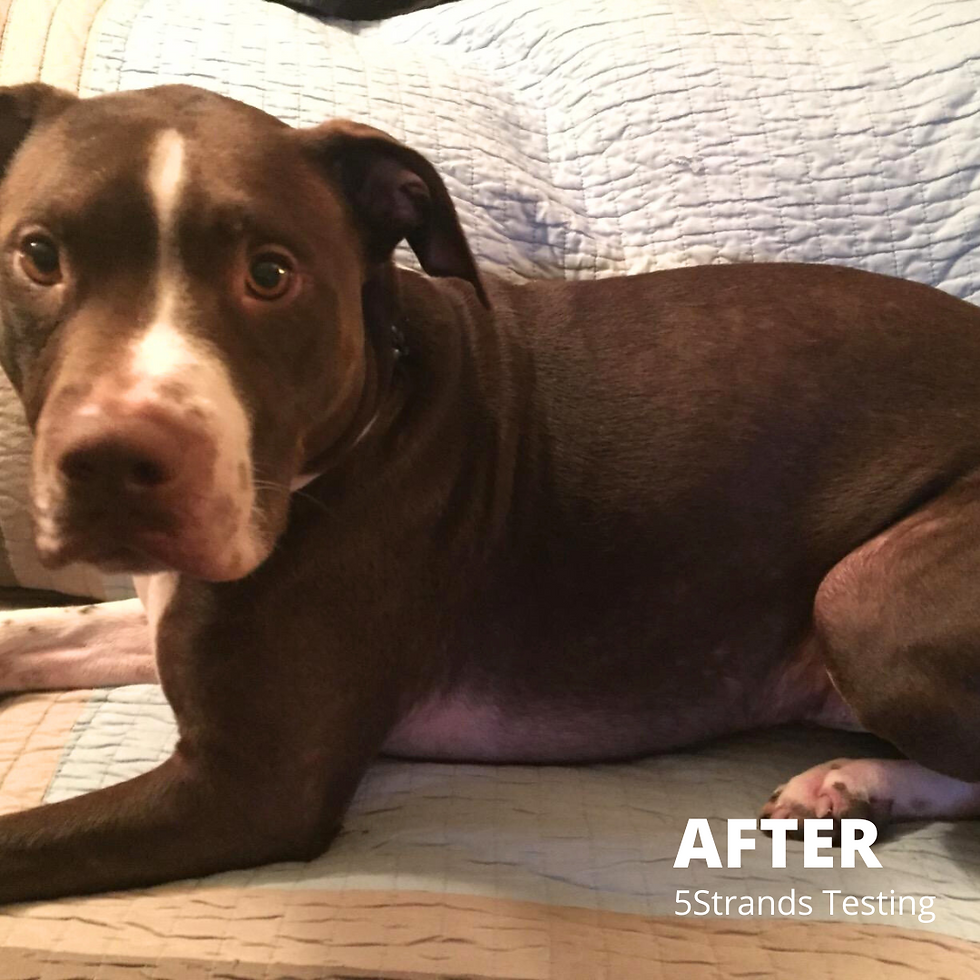
If you want to feed your pup kibbles and cooked foods, you ordered this test here.
At the time of its writing, The Pet Food Intolerance Test covers over 570 items, ranging from proteins, grains, dairy, and probiotics to preservatives, fruit, and vegetables.
If your dog is eating it. It’s likely on here.
Use code RELIEF for the biggest savings, or TOEMILYJUNE if they figure out my employee discount code is still active.

This is one of 5Strands’ more basic tests, but don’t underestimate the weight it pulls in transformation.
If you’re awake to the food industry, and the cost of a raw food diet is sheer peace of mind, you’re avoiding all this nonsense while providing the best you can for your pet's longevity, dental health, bowels, and coat, then you purchased the Raw & Fresh Food Pet Intolerance Test.
It covers a wide range of protein sources, bones, legumes, superfoods, and more.
Testing helped you avoid wasting time, money, and further suffering by pinpointing the foods your pet could digest without consequence.
You were also super smart in transitioning diet slowly, remembering what it feels like to go from fast food to a healthy diet equivalent to a juice cleanse.
5Strands has a lot of testing.
They are a highly reputable company that originated when the female founder was so sick she flew to Europe to find answers she wasn’t getting in the United States.
There she discovered bioresonance testing, which has been around for decades but was completely unknown to her and the medical professionals she had worked with.
Due to a massive improvement in her health, her daughter’s friend encouraged her to make a simpler version of the technology available in the United States.
He then went to college and learned the skills to help her with this dream.

In 2017, when they launched, learning whether you were gluten-sensitive was important, so this was their humble beginning before expanding into testing for cats, dogs, and horses.
Their testing uses a very sophisticated and, might I say, pricy machine that remembers the energetic imprint of anything you input and compares it to a hair sample or nail clipping to determine which substances resonate and which produce inflammation.
It is highly personalized, and the cool part is that as you or your pet heals, the results can change and be determined by your current state.
The scope of this technology goes far beyond intolerance testing, with full-body scans for issues, and its cost is well into the hundreds of dollars, but for our purposes, these specific results make it more readily available and affordable.
Not only was 5Strands the first company in the US to provide intolerance testing, but the technology they use is Rolls-Royce-level compared to some competitors.
They also have a fully dedicated team at their office in Georgia to answer questions and assist with processing.

Perfect!
You purchased testing with the discount code: RELIEF or TOEMILYJUNE
A small box arrives in the mail.
You open it and read the cover, which tells you how to register for your test to receive your results online.
Next, you track down your dog and give his hair a little tug to get anywhere from 5 to 20 strands, putting them into the enclosed baggy.
Close the box with the sample included, then put it in the prepaid mailer to receive your results.

Meanwhile, you downloaded the 5Strands application to your phone so you always have the results with you and can search them by category, from least to most reactive.
The search bar also makes it super handy to quickly compare a new food choice with the results.
However long the sample takes to get to Georgia, plus two processing days, is when this comprehensive list of results is emailed to you, with the user-friendly version available by logging into 5Strands on a desktop or by opening the app.
A few days later, you excitedly open the results to find your dog is allergic to what feels like everything under the sun!
How can that be possible?
Then you remember this writing in which we talk about these items being an inflammatory response, not an immune response.
Your pup's gut is really upset right now, and with a little patience in finding a new food without red and orange markers, most of that is going to calm down, as evidenced by the bowels, coat, and behavior.
After three days on the new food, you are already seeing some relief that you didn’t see from the prescription diet recommended by the vet.
In two weeks, you notice things are evening out so naturally that it wasn’t on your radar that your dog didn’t lick his paw to raw as your nightly bedtime wind-down routine.

In fact, the scab is starting to heal, and it no longer looks red.
You are flabbergasted that $100 dollars appears to be solving the problem, especially since the results were so shocking, causing you to second-guess the whole decision.
On a sunny afternoon, when you return from work, your dog greets you with a full butt wag in excitement, and you realize his paw has healed.
You grab your camera to capture the moment, then gather the photos you took to show your friend, who lives in another state.
What a massive improvement in the span of a month compared to the trials of before.

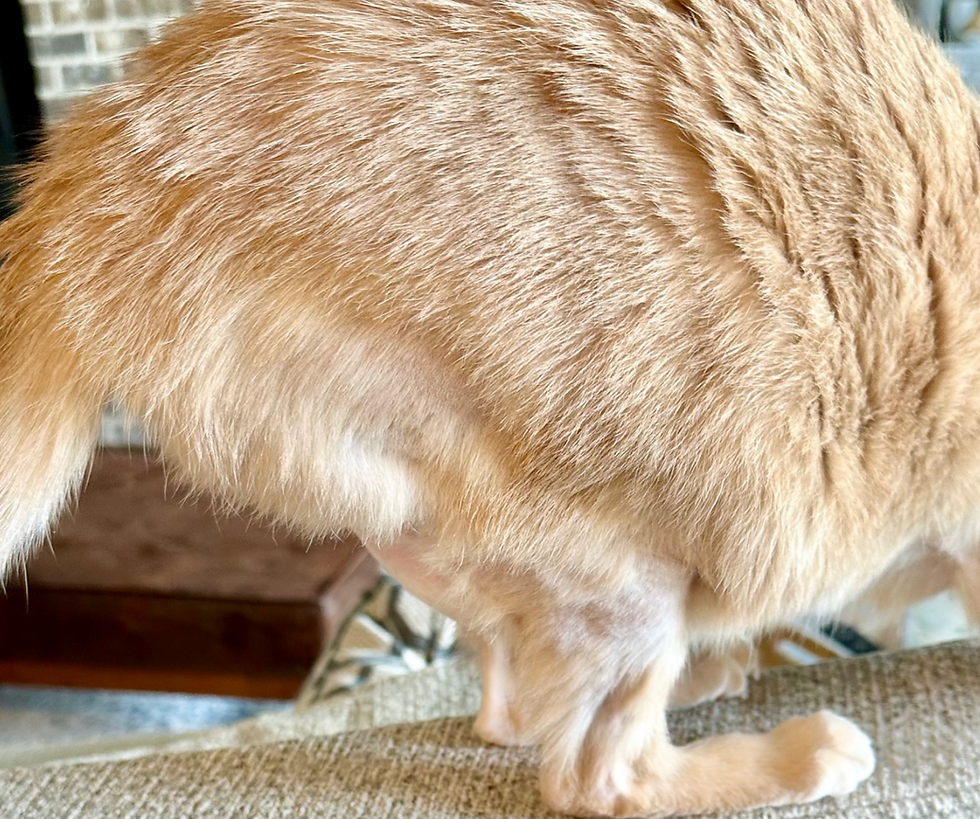
Next, your source is the Review request email from 5Strands, which is buried in your inbox.
Tell your story of the amount of time you had to endure watching your dog suffer, and the cost, food changes, and medications it took to try to relieve the problem.
Finally, relief, as evidenced by your before-and-after photos.
You are happy, and so is your pup.
You retest a few months later to see the changes, and before widening the diet to a new food choice, because you know nobody wants to eat the same thing day in and day out indefinitely, and that our digestion and nutritional diversity don’t love that either.
A member of the marketing team sees your testimonial and pastes it into the Slack chat to be cheered for.
By the next day, there are hearts, big smiles, and party hats celebrating the post as a job well done.
Some of these are saved to the CEO’s Google Drive, where the next team member gets to celebrate them, giving her the pride that her job is actually creating immense relief for people and pets, making a difference in this world.

That is why I talk about 5Strands Testing.
It warms my heart to know how many lives have been changed for the better, and it also infuriates me that the suffering is prolonged and exploited because bioresonance is not profitable for the pet food and pharmaceutical industries, and that we are educating our medical professionals.
In any case, 5Strands and I will continue to do our best to bring awareness with the ultimate goal of putting health in your hands in a cost-effective way that allows you and your pet to live a healthy, vibrant, long life.
Cheers.
P.S. I mentioned how 5Strands was a part of my own wellness journey. If you are interested in my research on low-effort ways to reduce inflammation and regain some sovereignty over your vitality, I encourage you to subscribe to my monthly newsletter.
Comments